Project
Loop
Nov 27-28 2025
This collection of photographs taken around The Loop in Chicago was captured on a mirrorless digital camera with a vintage Canon telephoto lens from the 80s. Here, I explore how I cannot capture a building just once.
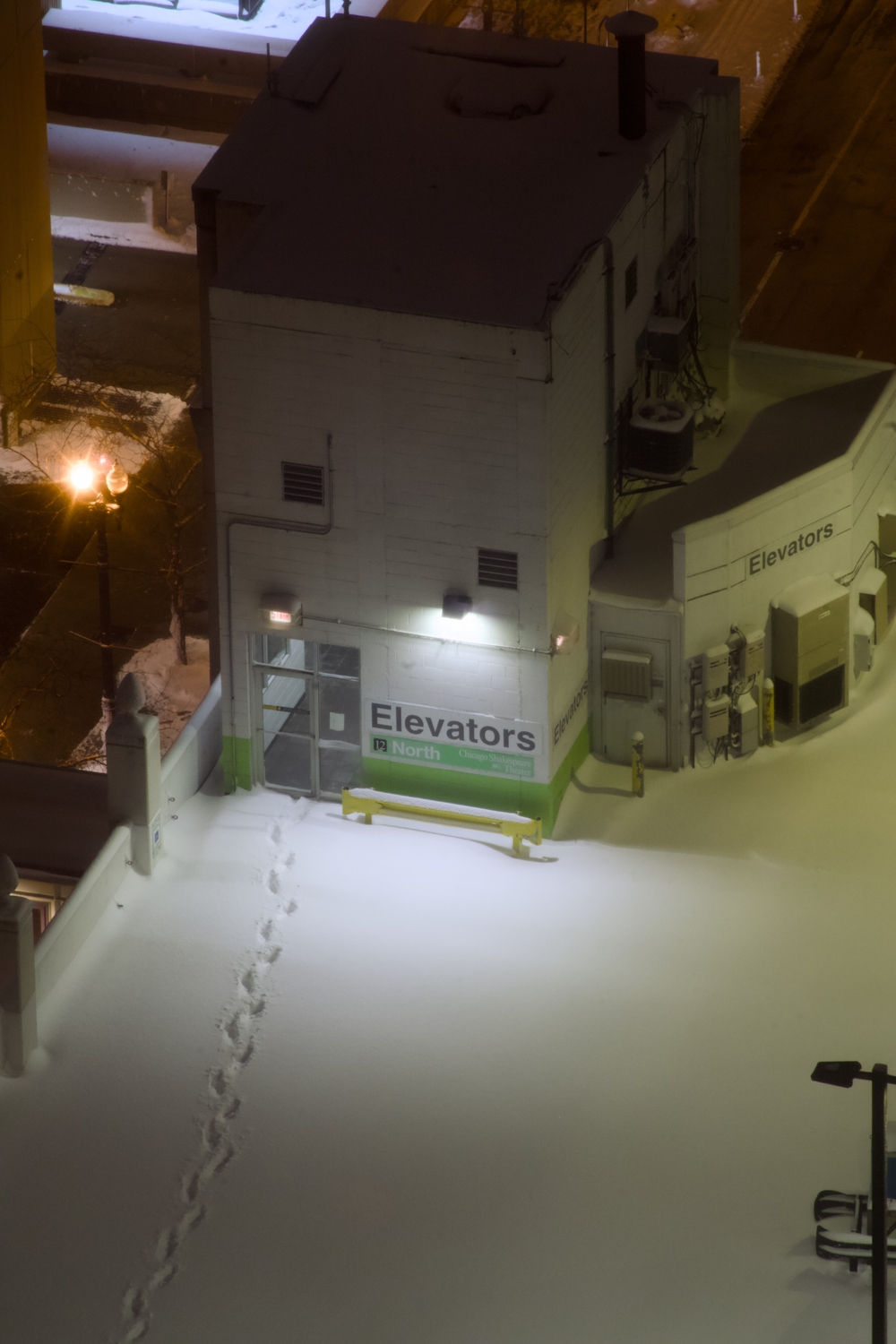
From my vantage point, I was able to view several rooftops and signs of life, such as footsteps on fresh snow.
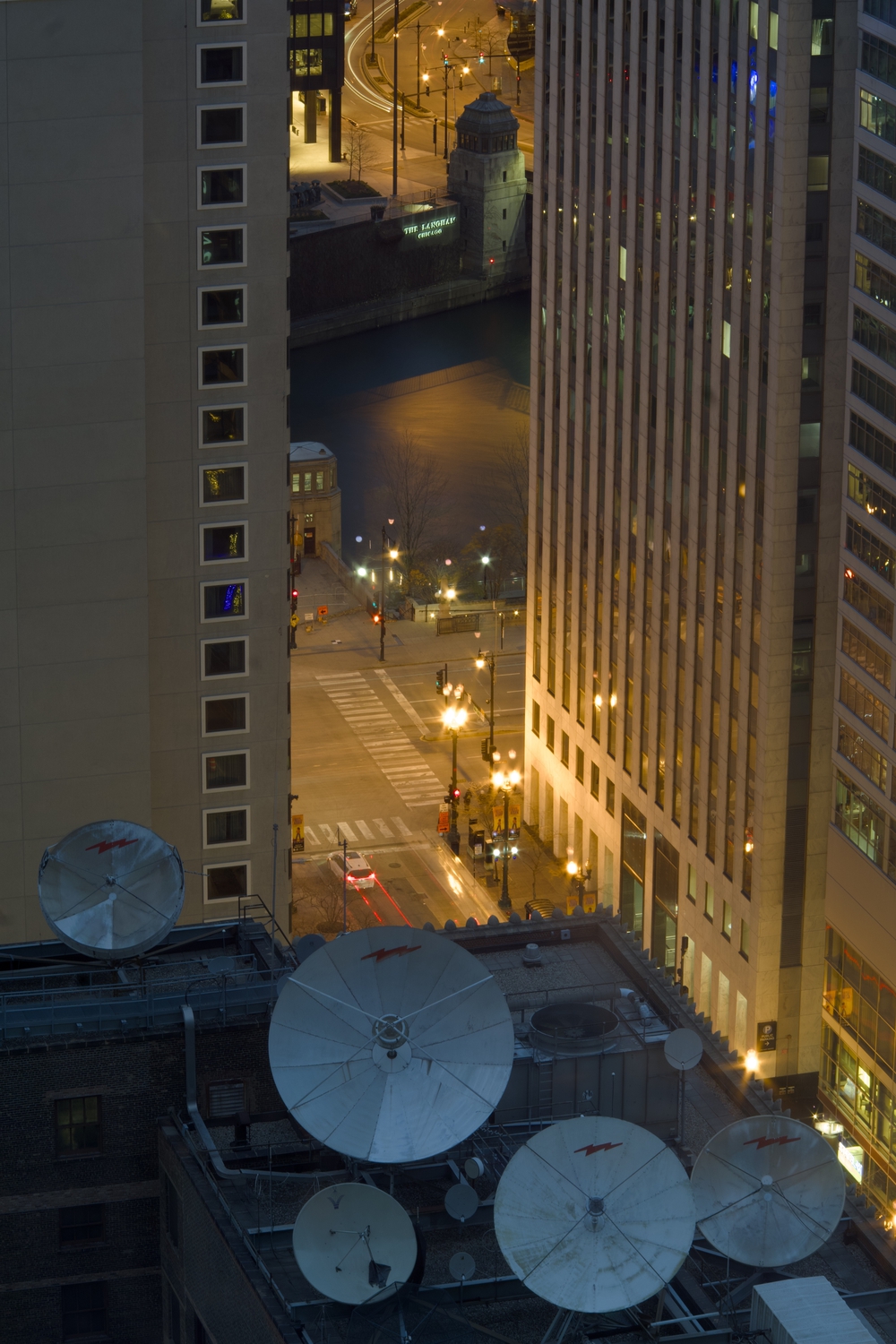
A long exposure time was needed to capture enough light through the vintage lens, which explains some light trails.
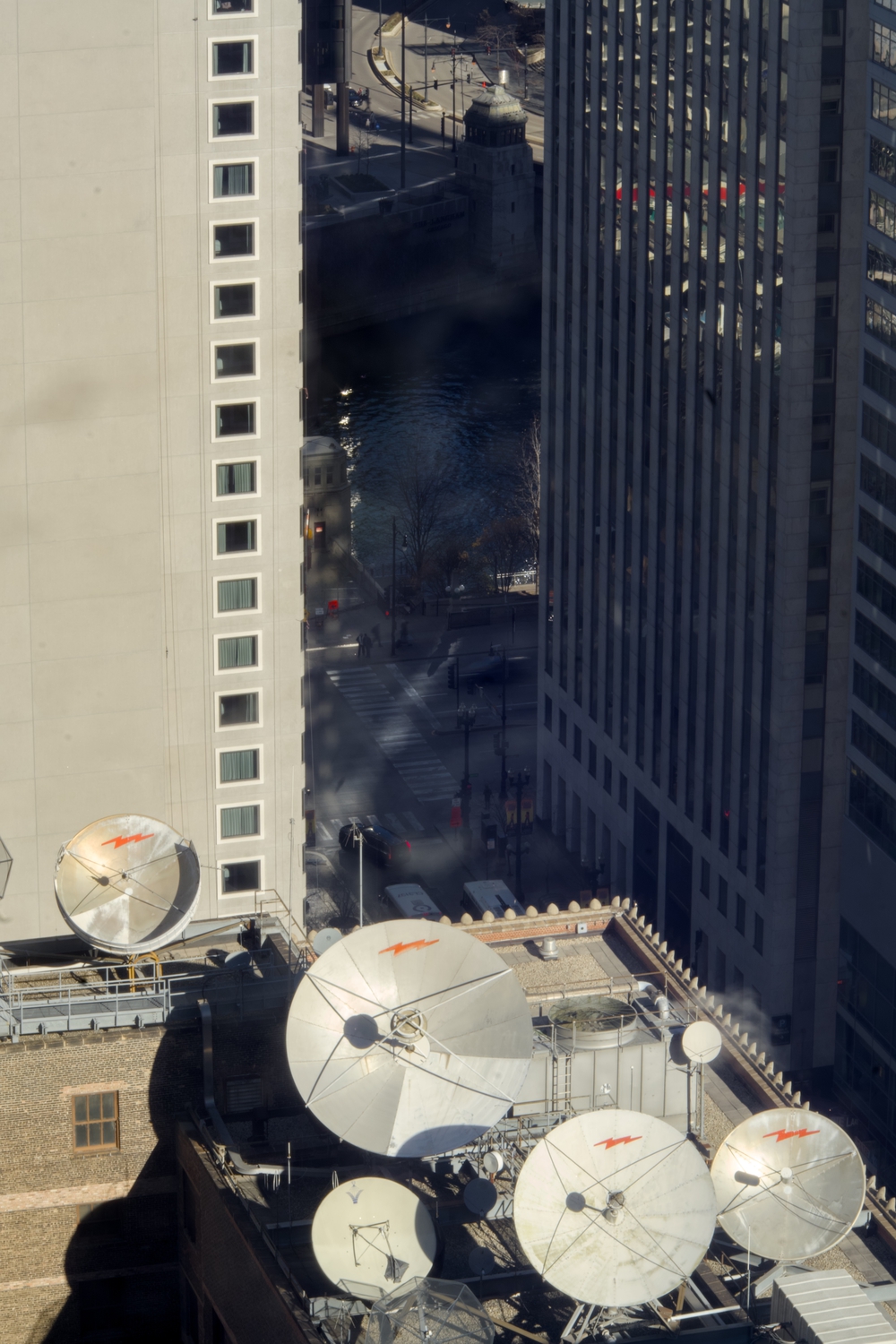
The old telephoto lens I used does not have modern image stabilization, which makes one very aware of even the slightest movement if shooting by hand. A tripod was mandatory.
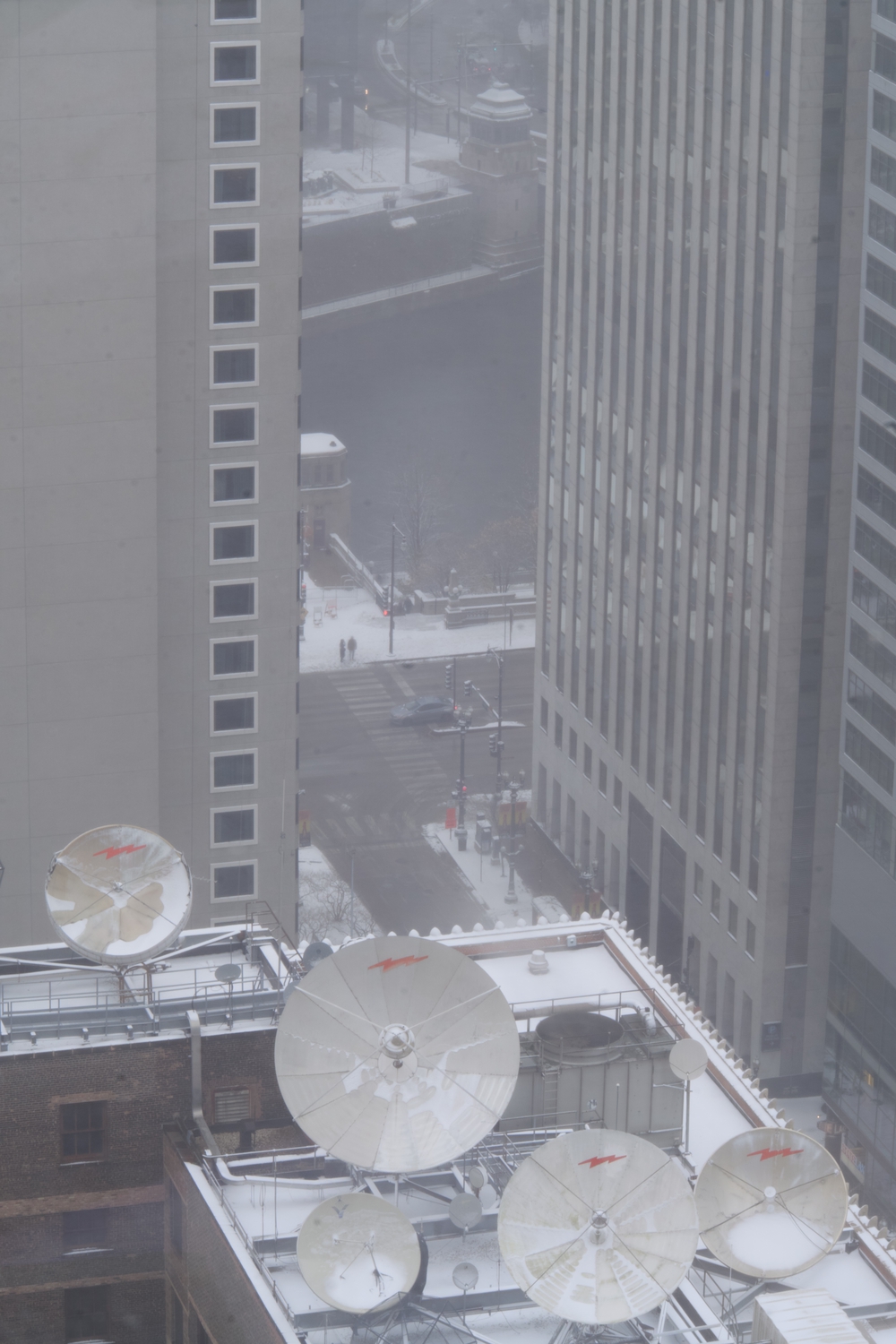
The changing daylight and weather conditions render new scenes of buildings that were previously captured by the camera.
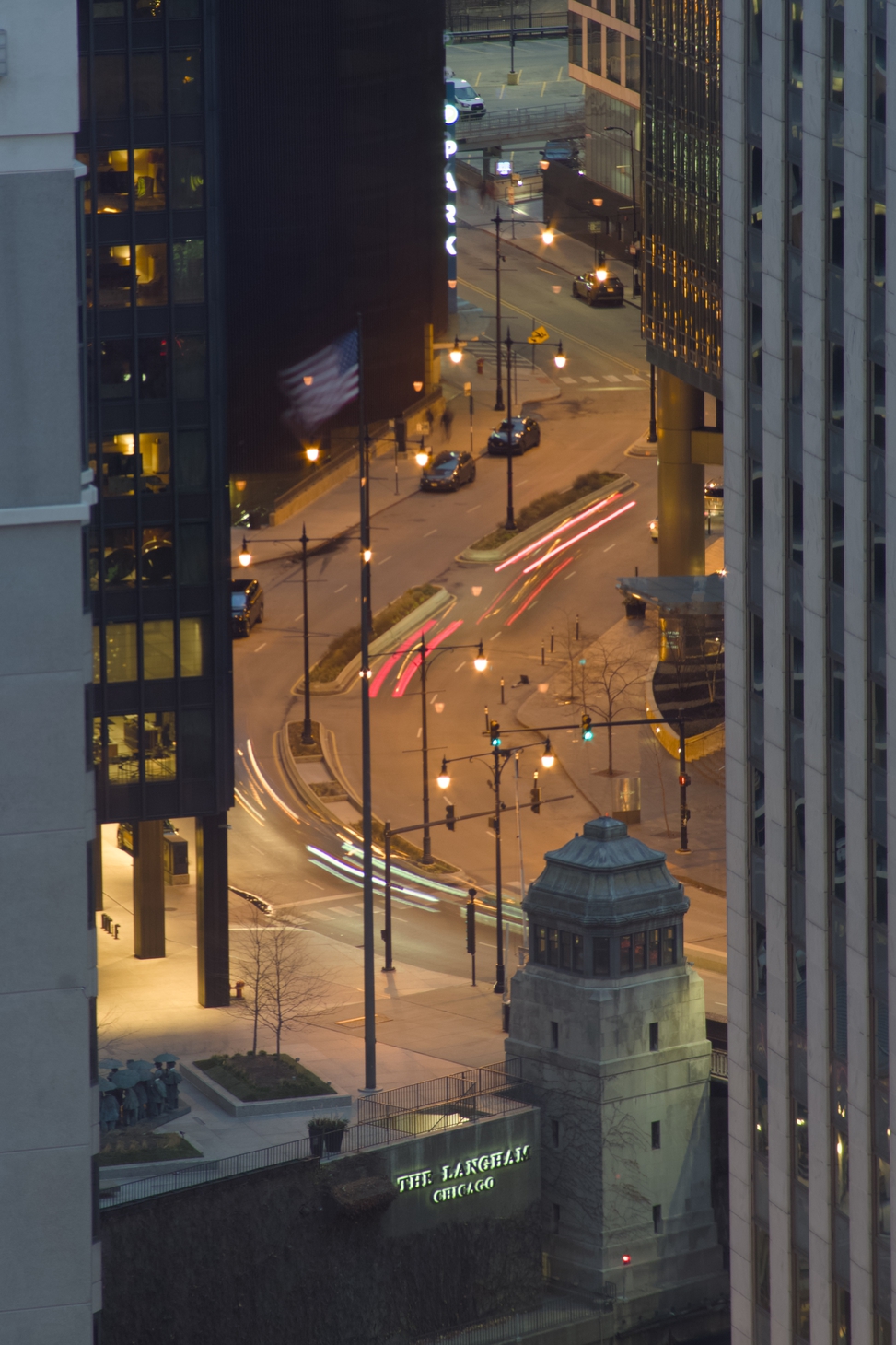
A positive side effect of the long exposure was the capture of car and flag movements as motion blur.
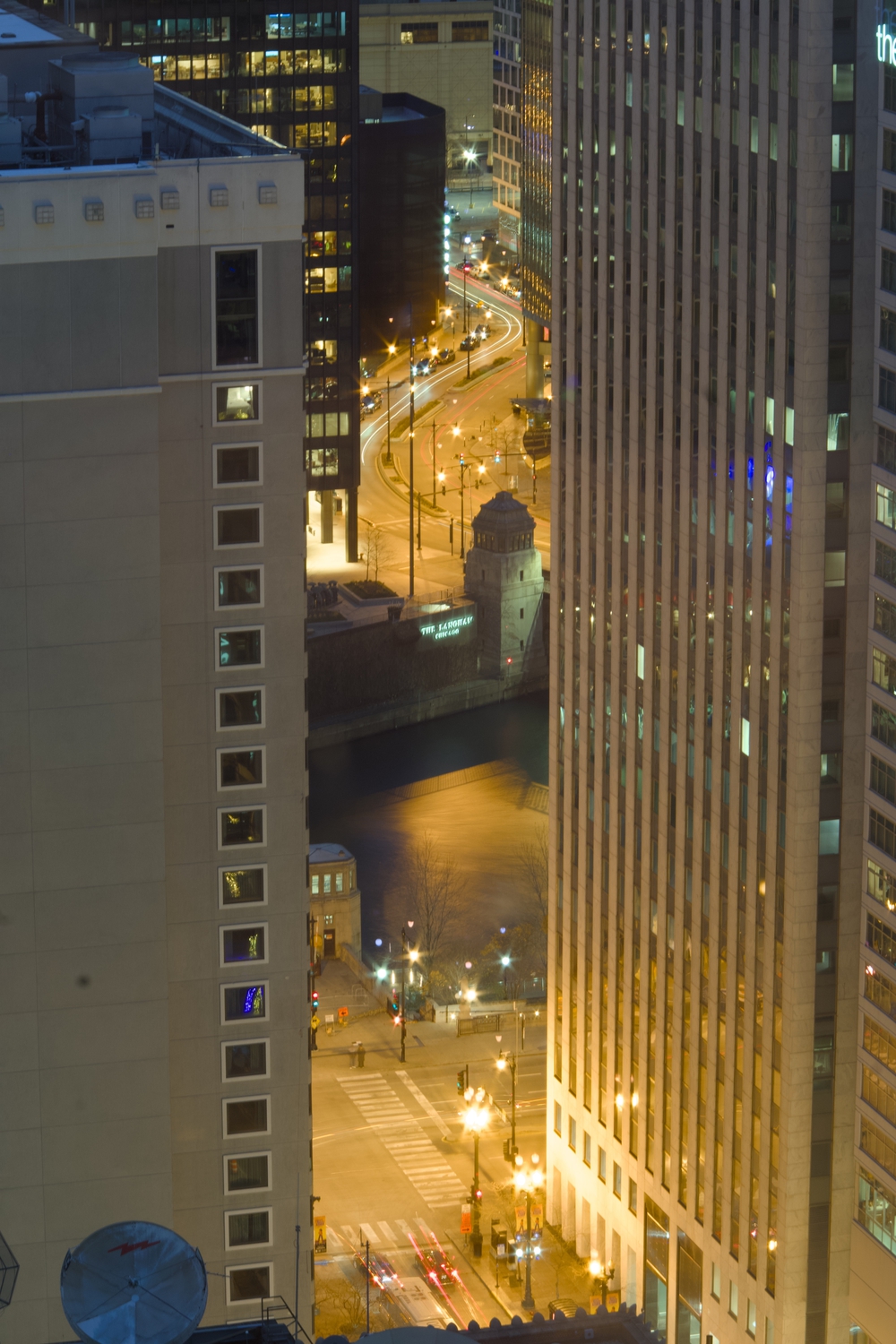
Although the lens is several decades old, it has an impressive ability to produce clear images at different focal lengths, i.e., zoom levels.
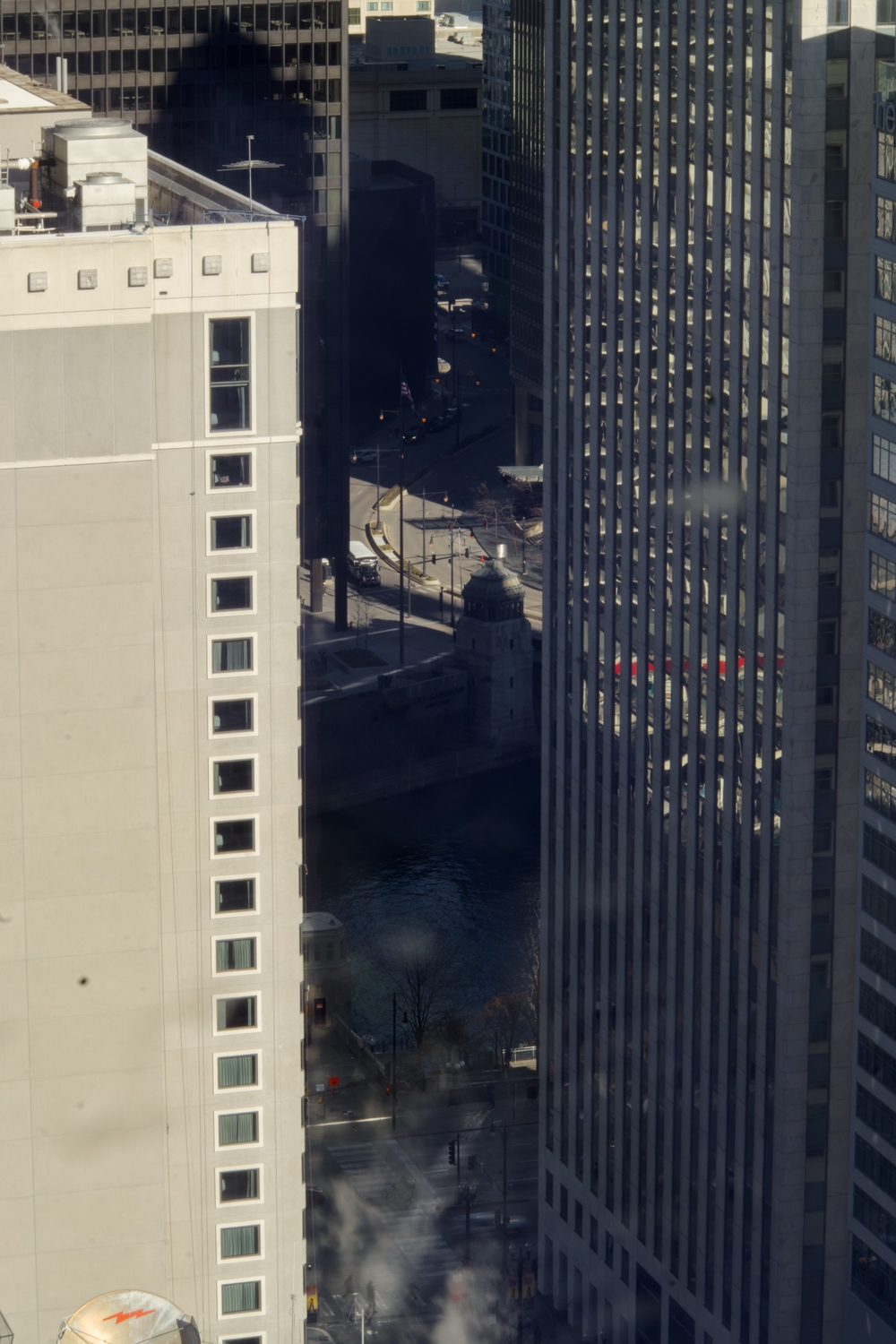
At a distance, I can capture long streaks of light wedged between skyscrapers.
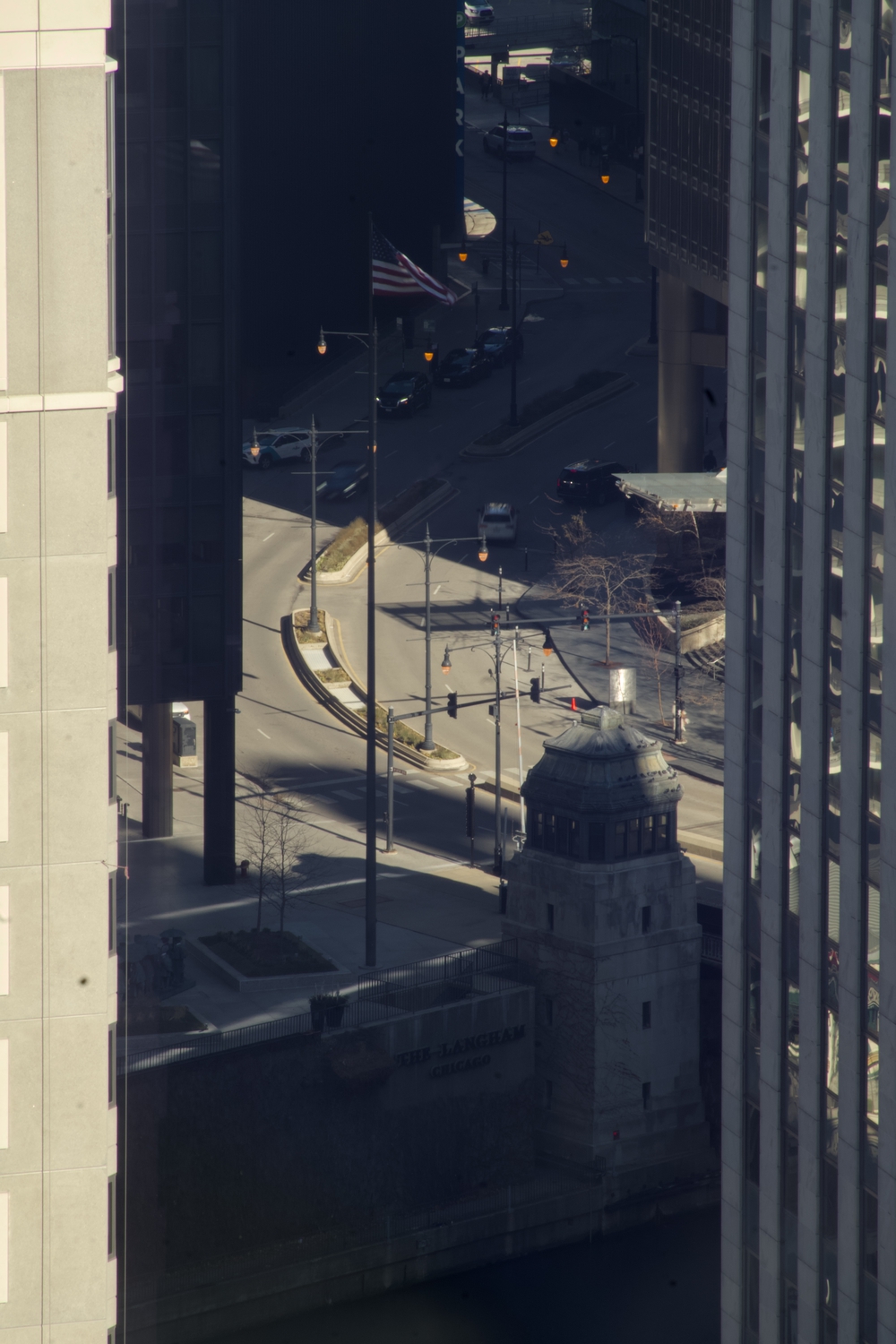
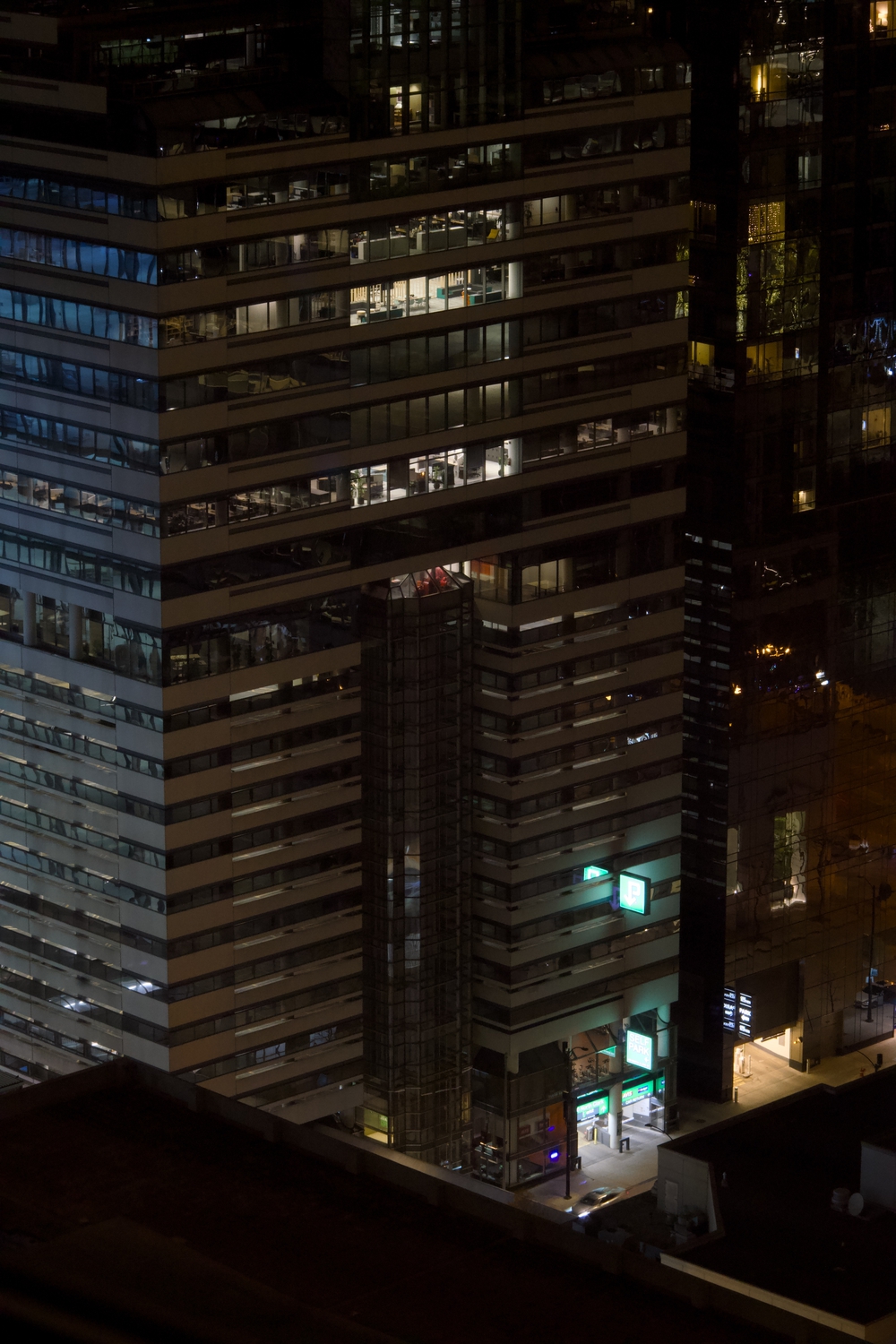
At night, I was able to caputure how some buildings are illuminated by their neighbors and empty furnished office spaces.
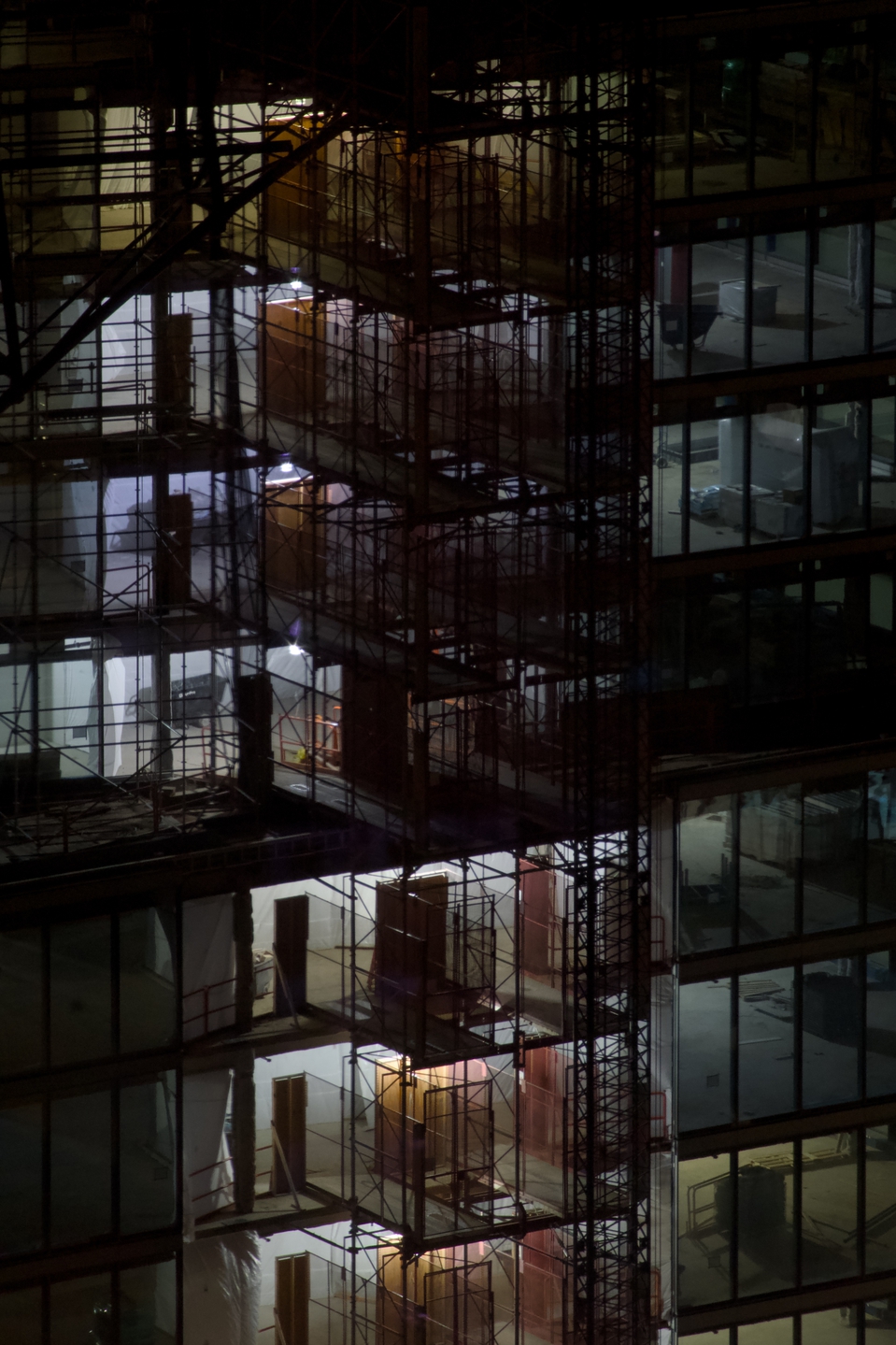
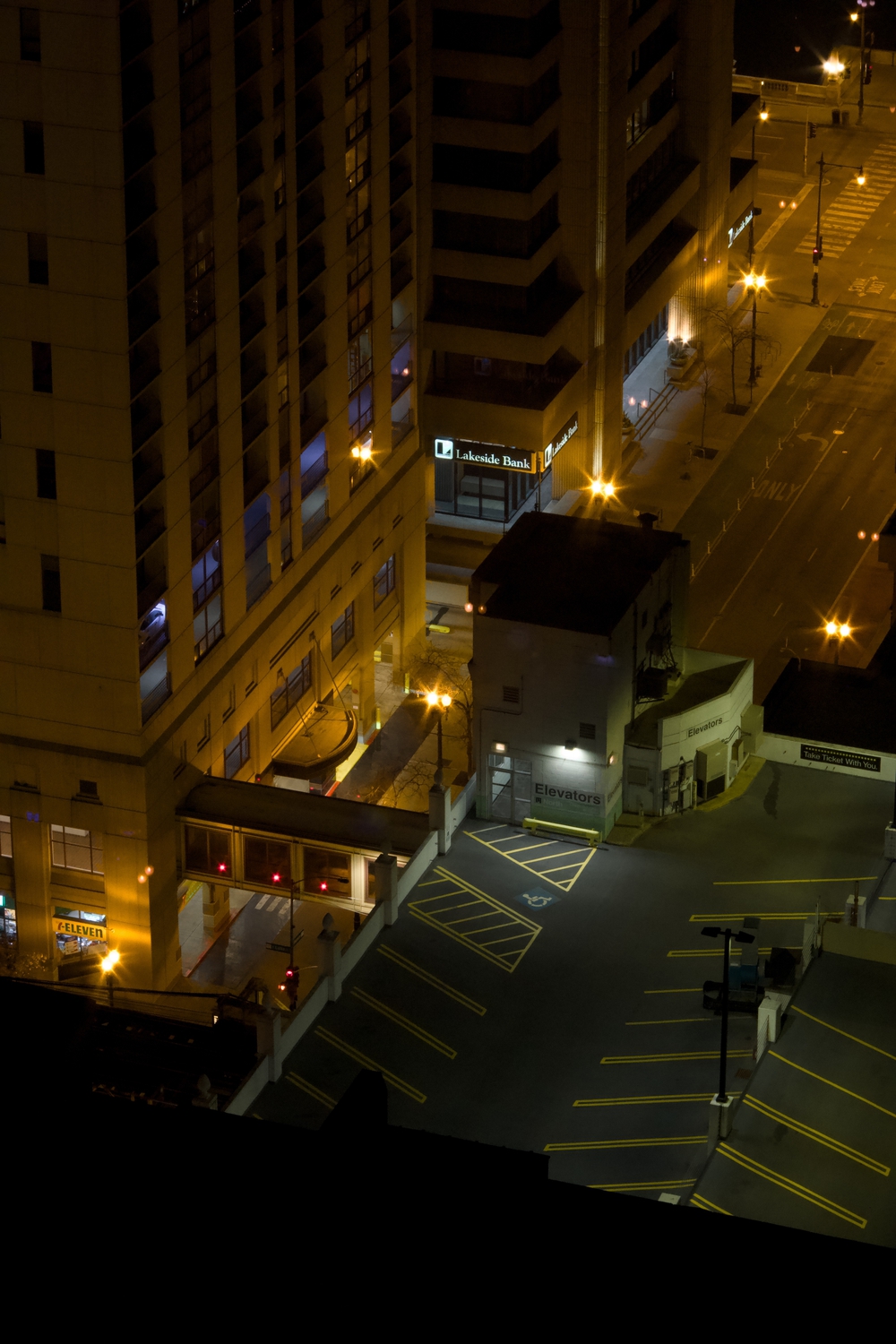
The varying types of light sources provided color contrast.
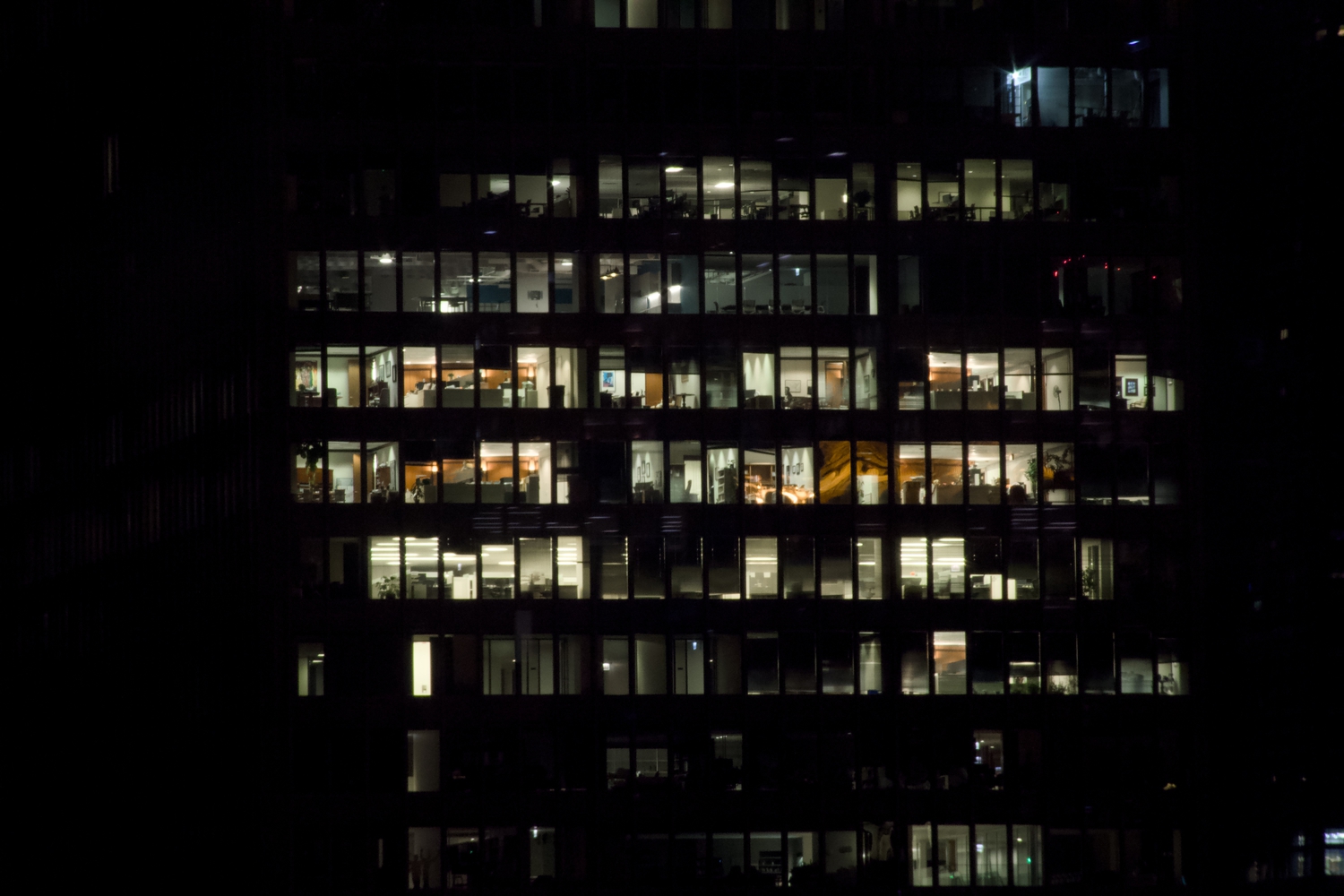
Some buildings do not reflect back enough light and only project office space lighting outwards. The window frames prevent one from seeing the complete rooms without a break.
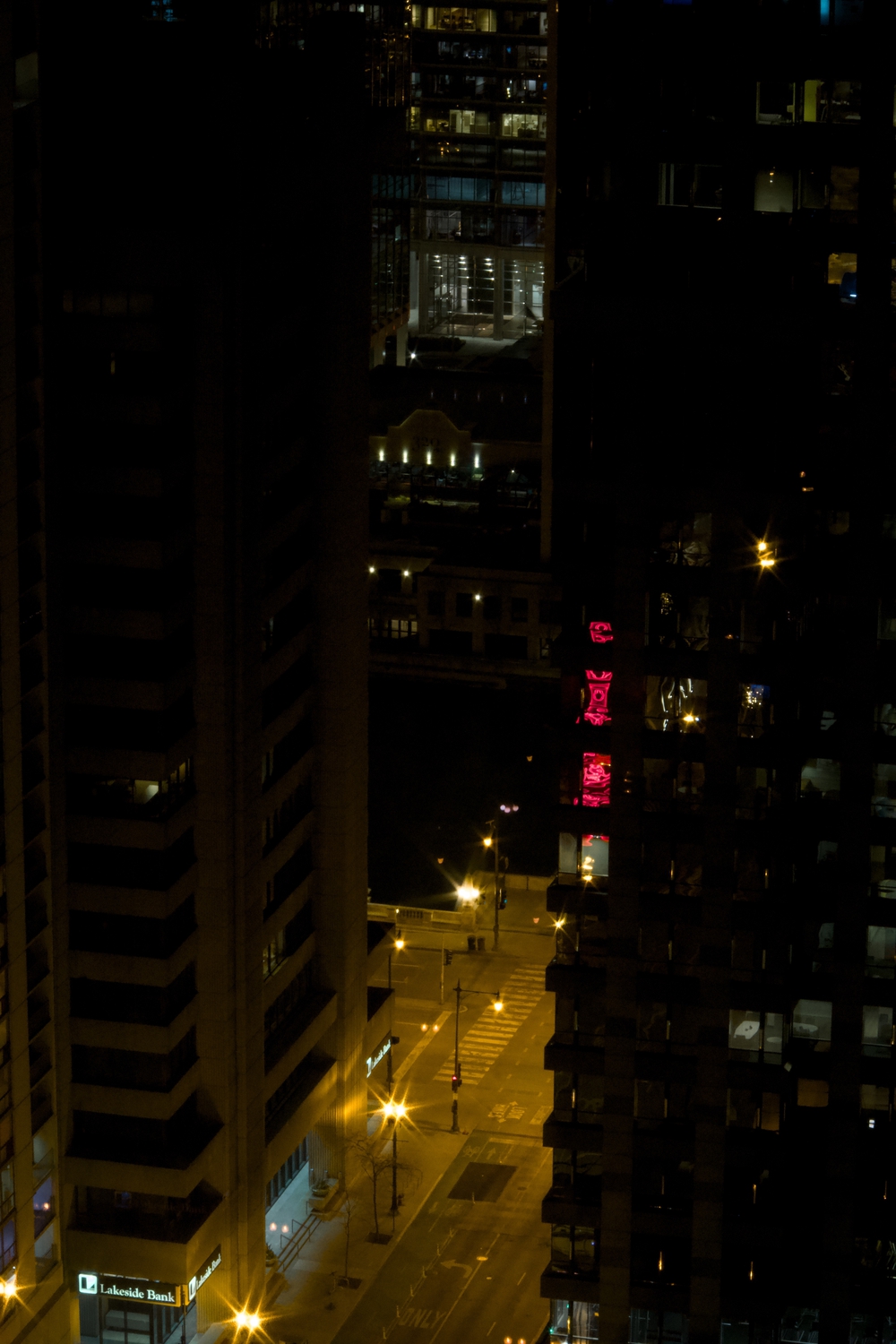
The reach of light from the street lamps has a steep drop-off several floors above street level.
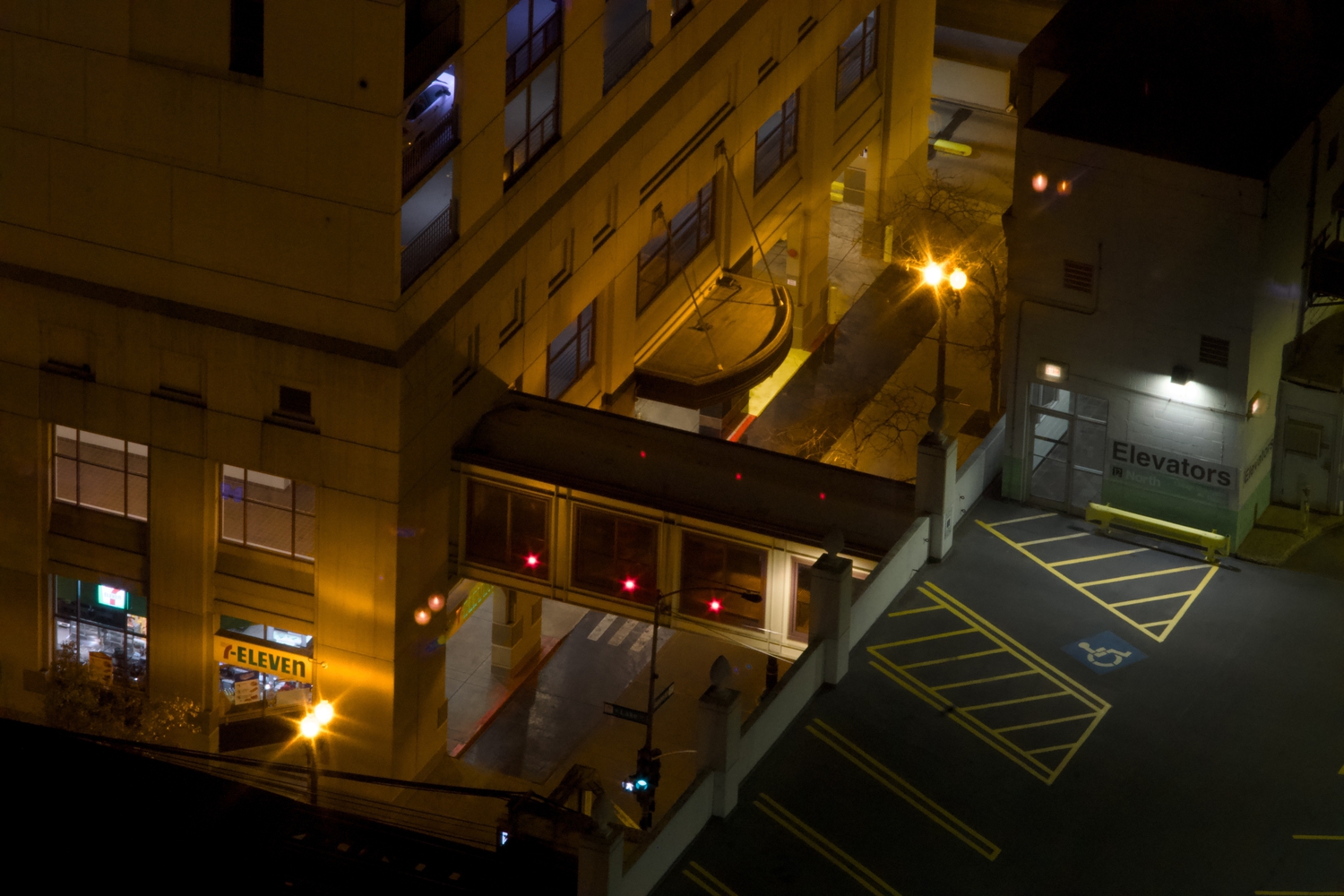
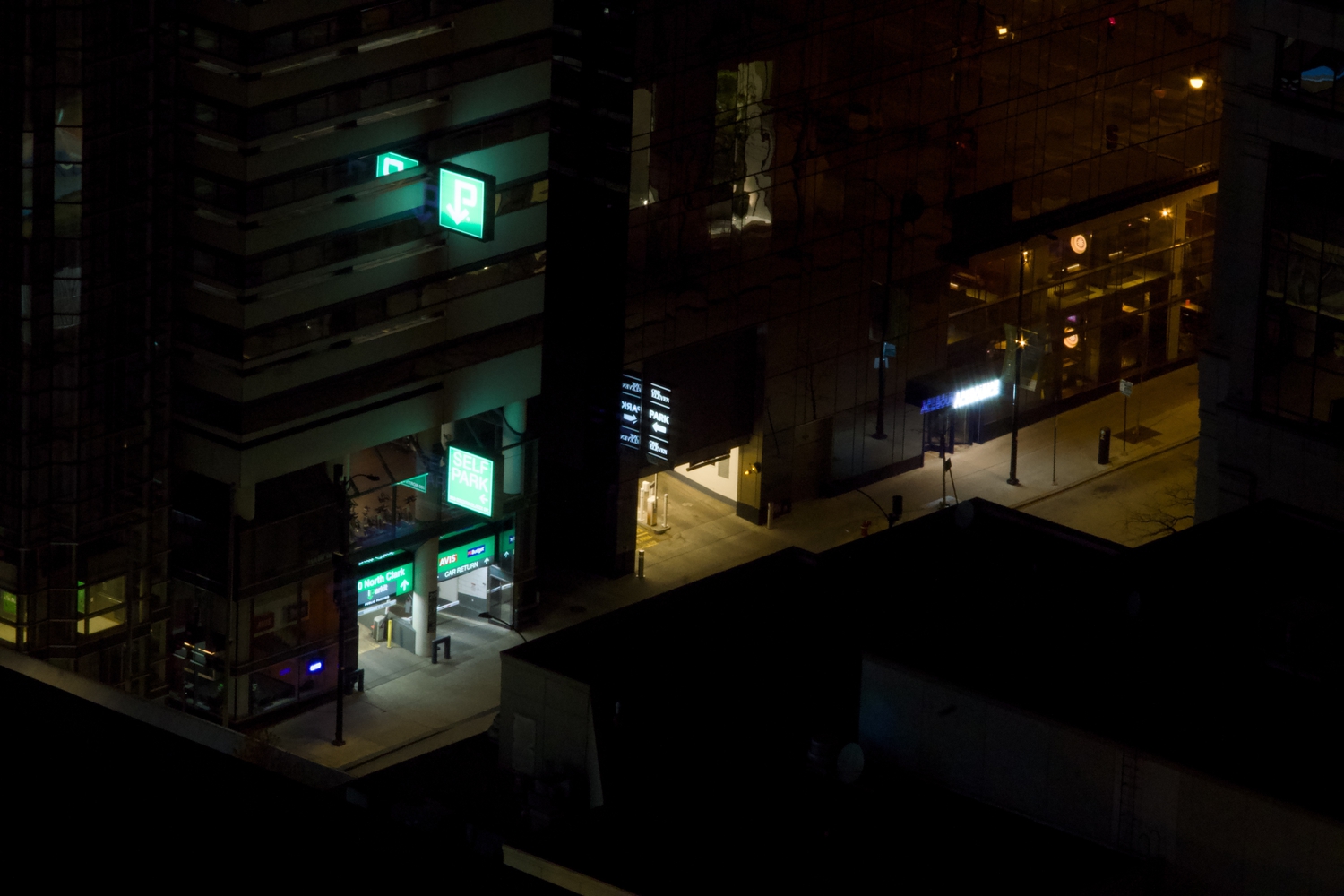
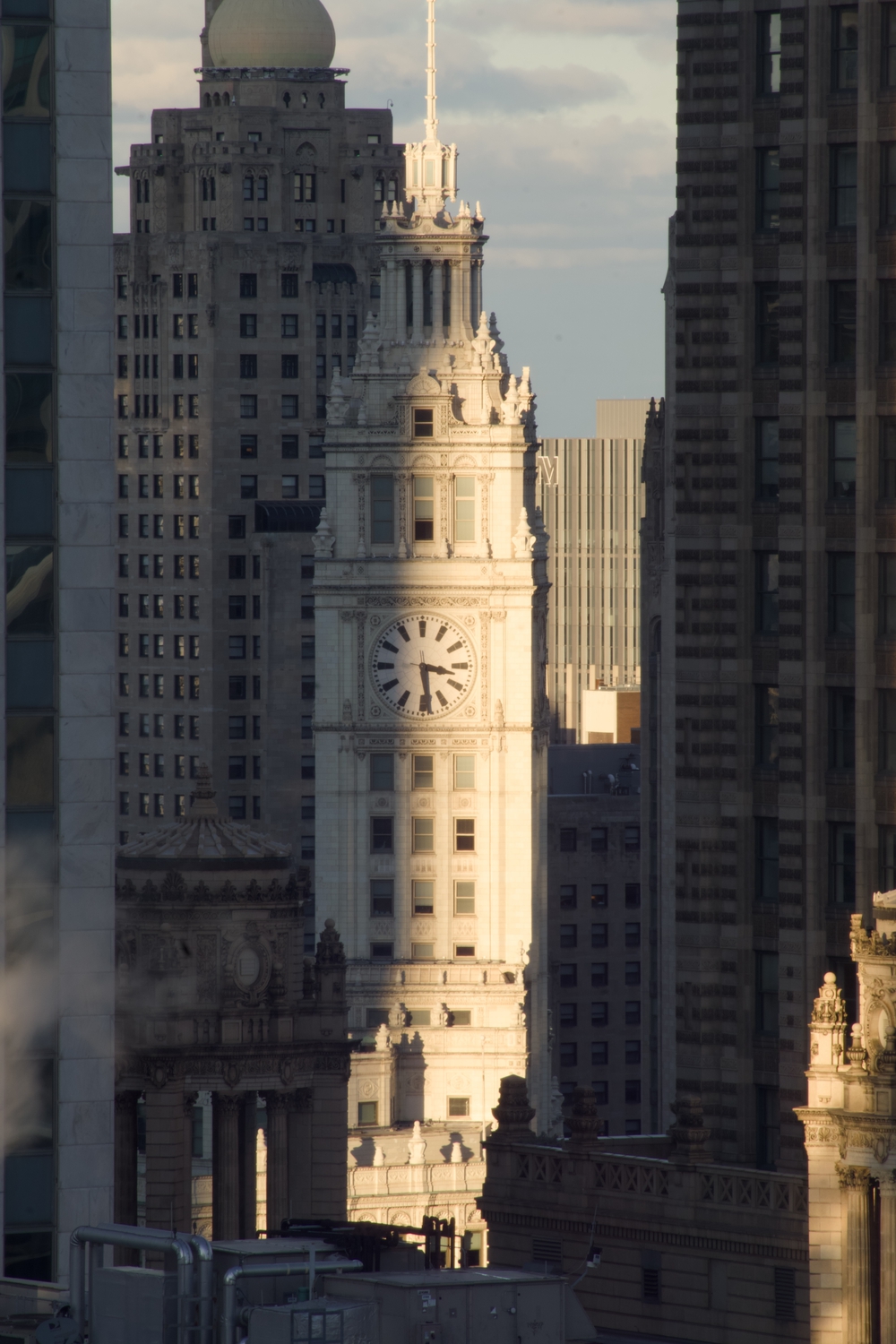
At sunset and sunrise, the shorter buildings are drowned by the shadows cast by taller buildings.
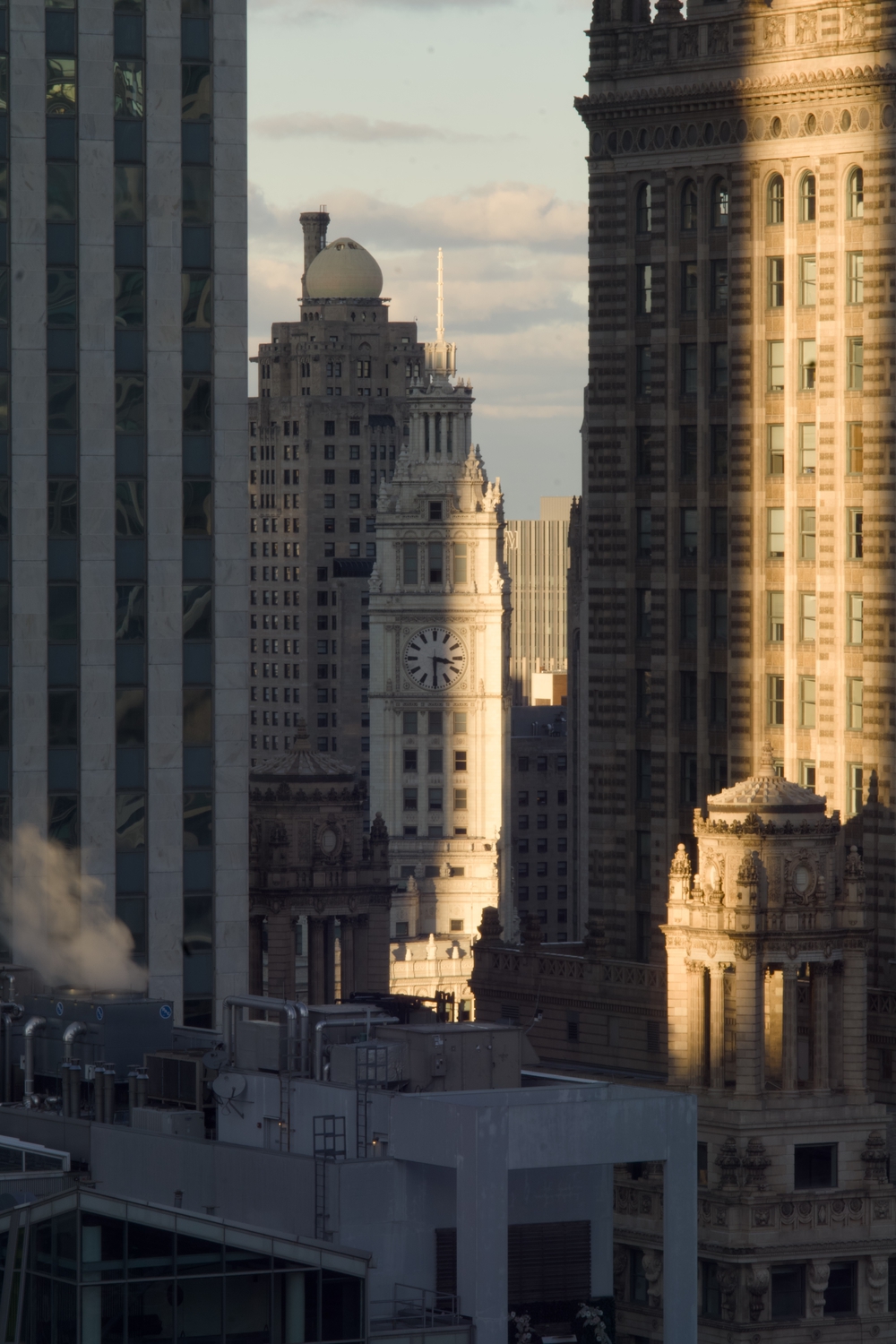
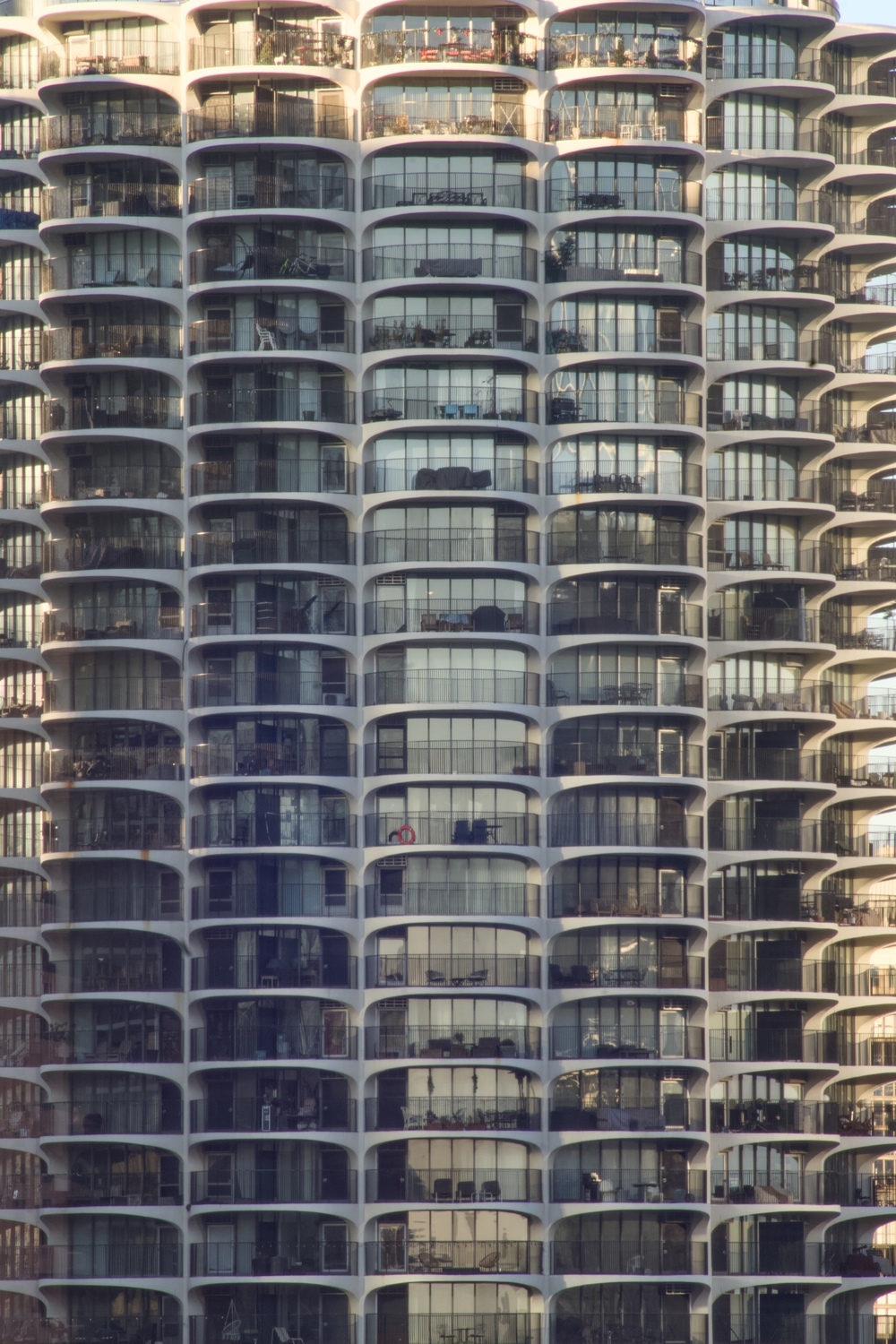
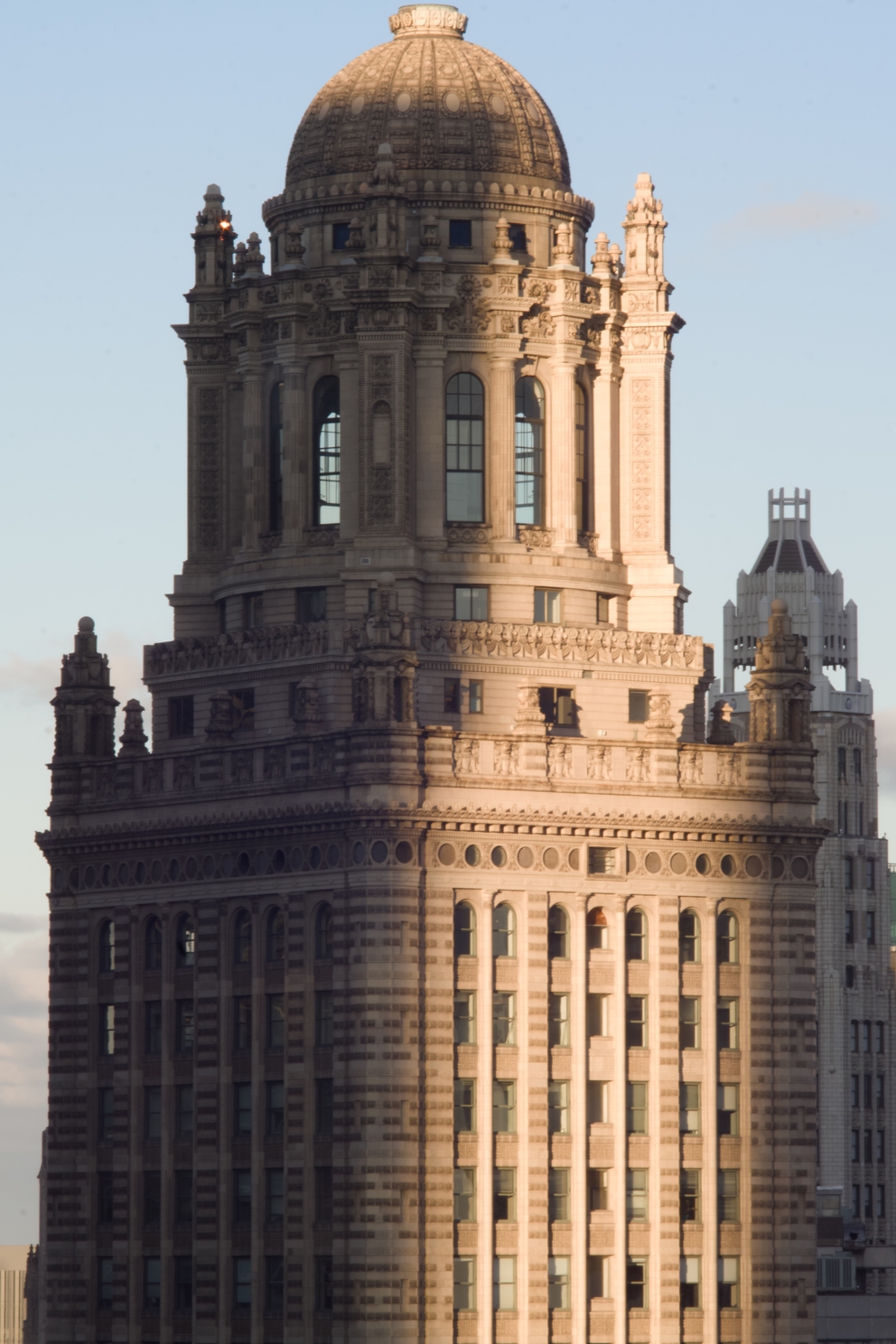
At the right moment, shadows can almost split buildings in half.
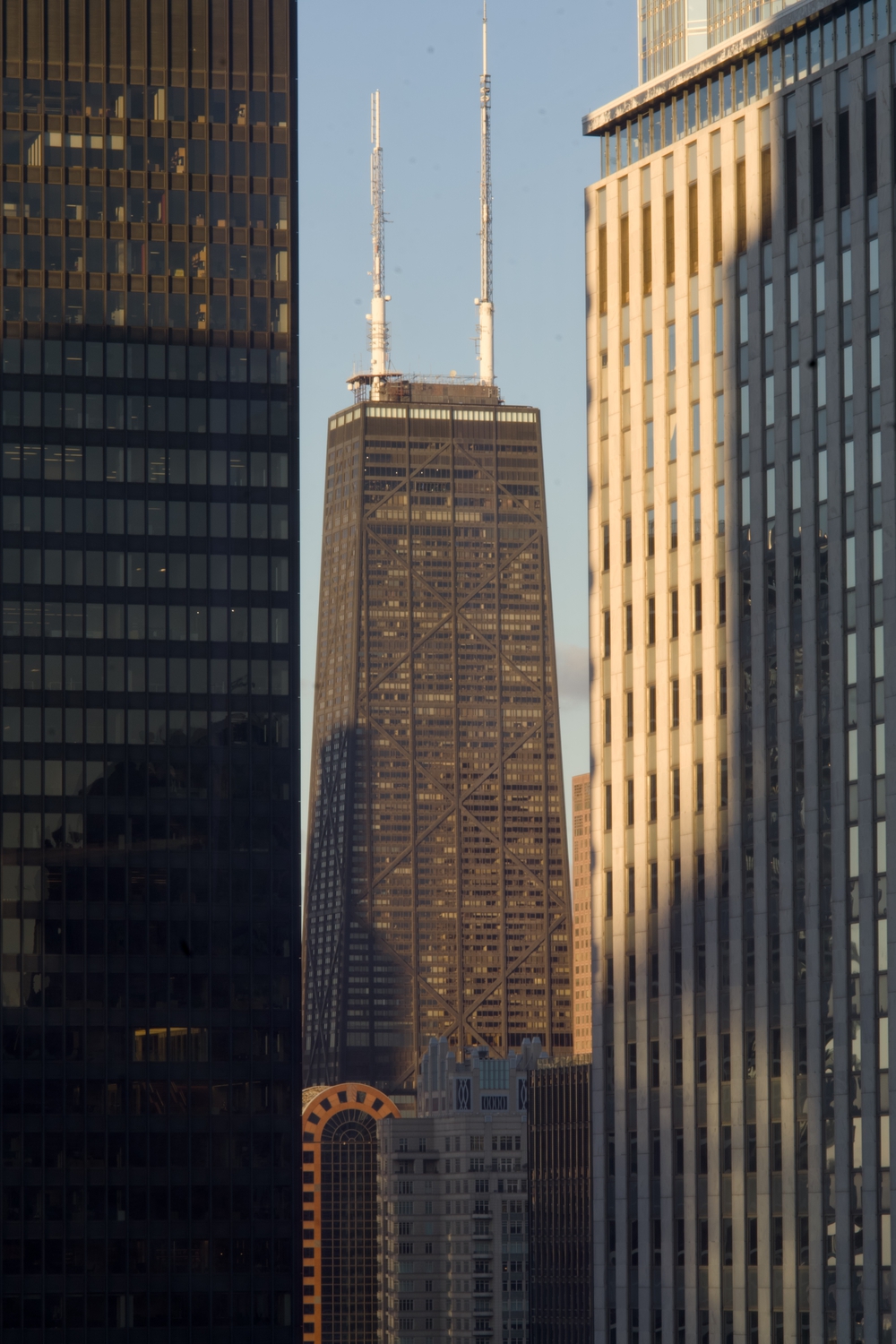
When catching the final light of the day, the tallest skyscrapers have no contest in dominating the scene.